
Beth and Rip Ride Again: Dutton Ranch Expands the Yellowstone Legacy
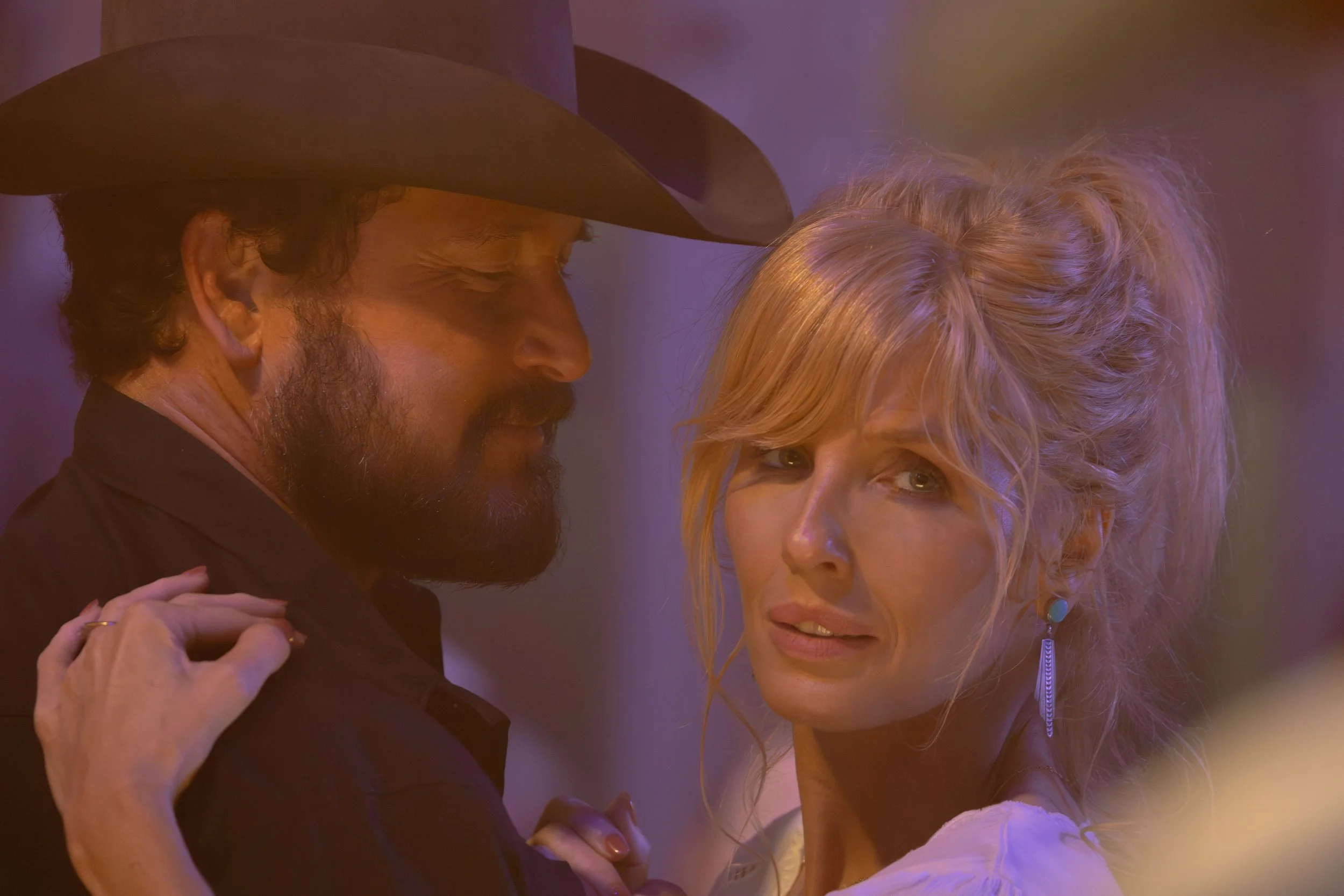
L-R: Cole Hauser as Rip Wheeler and Kelly Reilly as Beth Dutton in Dutton Ranch, episode 2, season 1, streaming on Paramount+, 2026. Photo Credit: Emerson Miller/Paramount+.
The Yellowstone universe is far from finished—and if anything, it’s getting sharper, riskier, and more intimate. With Dutton Ranch set to premiere May 15 on Paramount+ and Paramount Network, the saga pivots toward one of its most compelling relationships: Beth Dutton and Rip Wheeler, played once again by Kelly Reilly and Cole Hauser.
But this isn’t just a continuation—it’s a reckoning.
A New Frontier, A Familiar Fire
Leaving behind the shadow of Yellowstone, Beth and Rip head into the unforgiving terrain of South Texas, hoping to carve out a future on their own terms. Yet Dutton Ranch makes it clear from the outset: distance doesn’t erase history. It only changes the battlefield.
The series introduces a new kind of threat—a rival ranching empire as ruthless as anything the Duttons have faced before. In this world, power is territorial, loyalty is conditional, and survival demands sacrifice. The tone is darker, more existential. Beth and Rip aren’t just fighting enemies—they’re fighting the weight of everything they’ve carried with them.
Expanding the Power Circle
Joining the series are heavyweight performers Ed Harris and Annette Bening, whose presence signals a shift toward even greater dramatic gravity. Their roles, though still partially under wraps, are expected to reshape the power dynamics of this new frontier.
A strong supporting cast—including Finn Little, Juan Pablo Raba, Jai Courtney, and Natalie Alyn Lind—rounds out a world that feels both expansive and tightly coiled with tension.
A Story About Survival—At Any Cost
Created by Chad Feehan and rooted in characters originally conceived by Taylor Sheridan and John Linson, Dutton Ranch continues the franchise’s tradition of blending Western mythology with modern moral conflict.
But where Yellowstone often explored legacy and land ownership on a grand scale, this new chapter feels more personal—and more dangerous. The question isn’t just who controls the land. It’s who survives the fight to hold it.
Beth, long defined by her ferocity and emotional armor, now faces a future that demands vulnerability as much as strength. Rip, unwavering but haunted, must reconcile loyalty with the possibility of something resembling peace. Together, they form a partnership that is as volatile as it is devoted—a dynamic that remains one of the franchise’s most magnetic forces.
A Franchise That Refuses to Slow Down
With a two-episode premiere followed by a nine-episode first season rollout, Dutton Ranch signals that the Yellowstone universe is evolving rather than concluding. Under the production banner of Paramount Television Studios and 101 Studios, the series maintains the cinematic scale fans expect while narrowing its emotional focus.
The decision to simulcast on both streaming and cable underscores its broad appeal—bridging traditional audiences with the growing demand for on-demand storytelling.
The Cost of Reinvention
At its core, Dutton Ranch is about reinvention under pressure. It asks whether people forged in conflict can ever truly escape it—or whether they are destined to recreate it wherever they go.
For Beth and Rip, the stakes have never been higher. This time, they’re not just defending a legacy.
They’re trying to build one of their own—and risking everything in the process.